How to Choose the Best Diff Lockers for Your Driving Needs?
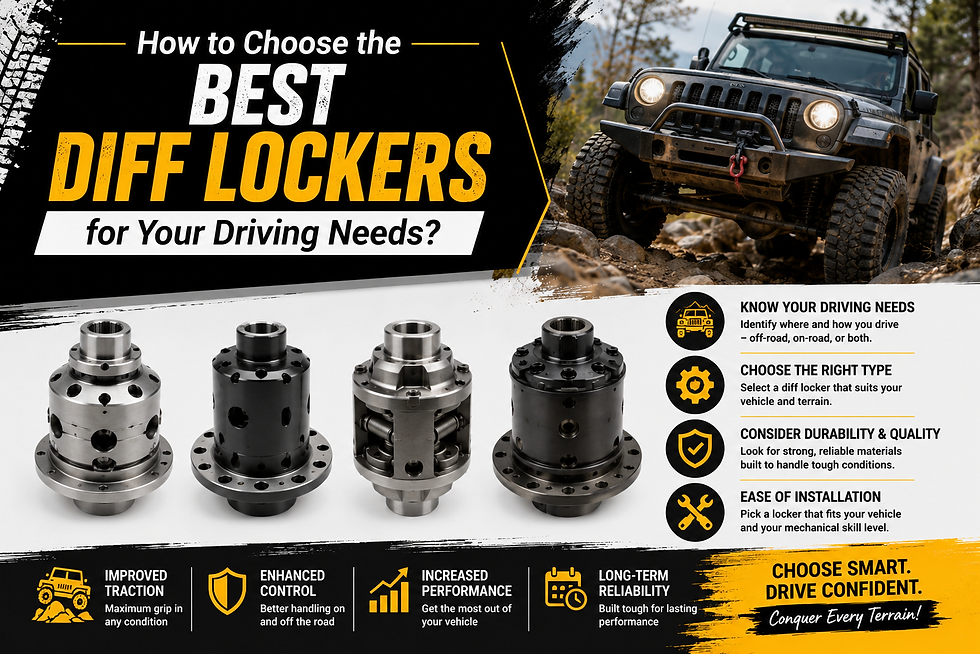
Ever found yourself stuck in a sandy creek bed, wheels spinning hopelessly while your mates watch on with knowing smiles? Have you wondered why some 4WDs seem to crawl over impossible terrain while yours struggles on moderately challenging tracks? Or perhaps you've heard seasoned off-roaders banging on about diff lockers and wondered what all the fuss is about?
If you're serious about getting the most from your 4WD, understanding differential lockers is absolutely key. These clever bits of kit can transform your vehicle's off-road capability, turning a weekend warrior into a trail-conquering machine. Whether you're tackling the red dirt of the Outback, navigating coastal sand dunes, or picking your way through rocky terrain, the right diff locker setup can make all the difference.
In this guide, we'll break down everything you need to know about choosing the perfect diff lockers for your driving style. We'll explore the different types available, weigh up front versus rear installations, examine the top brands on the Australian market, and help you decide whether DIY installation is right for you. By the end, you'll have the knowledge to make an informed decision that suits both your budget and your adventures.
What Is a Diff Locker and How Does It Work?
Understanding Your Differential System
Your vehicle's differential is the clever mechanism that allows your wheels to rotate at different speeds when cornering. Without it, your tyres would scrub and skip around every bend. However, this same feature becomes a problem off-road—when one wheel loses traction, all the power goes to the spinning wheel rather than the one with grip.
A diff locker essentially overrides this behaviour. When engaged, it locks both wheels on an axle together, forcing them to rotate at the same speed regardless of traction conditions. This means power gets distributed to both wheels equally, dramatically improving your ability to maintain momentum over challenging terrain.
The Difference Between Open Diffs, Limited Slip, and Locking Differentials
Open differentials are standard on most vehicles but offer no traction assistance whatsoever. Limited slip differentials (LSDs) provide a middle ground, transferring some power to the wheel with grip, though they're not as effective as true lockers. Locking differentials, on the other hand, provide 100% lock-up when activated, delivering maximum traction when you need it most.
Types of Diff Lockers Explained
Automatic Lockers: Pros and Cons
Automatic lockers engage and disengage without driver input, locking when torque is applied and unlocking during turns. They're simpler to use but can feel unpredictable on-road, sometimes causing clunking noises or affecting steering feel. Detroit Lockers are a well-known example of this type.
Selectable Lockers: When You Need Full Control
Selectable lockers give you complete control over when the differential locks. You get normal differential behaviour on the road and full lock-up at the push of a button or flick of a switch when off-road. This flexibility makes them the preferred choice for dual-purpose vehicles.
Air Lockers vs Electric Lockers: Which Is Better?
Air lockers use compressed air to engage, requiring an onboard compressor installation. Electric lockers use an electromagnetic mechanism, needing only wiring connections. Air lockers are generally considered more reliable in harsh conditions, while electric lockers offer simpler installation. Both perform excellently when properly fitted.
Lunchbox Lockers: A Budget-Friendly Option?
Lunchbox lockers (or drop-in lockers) replace only the spider gears in your existing differential carrier. They're significantly cheaper than full locker units and easier to install. However, they're typically automatic-type lockers with on-road compromises. For dedicated off-road rigs that don't see much highway use, they're worth considering.
Do I Need a Front Locker, Rear Locker, or Both?
Rear Locker Only: Is It Enough for Most Drivers?
For the majority of Australian 4WD enthusiasts, a rear locker alone provides substantial capability improvement. Around 60-70% of your vehicle's traction issues can be addressed with just a rear locker. It's also the safer option, as locking the front differential affects steering response and can make the vehicle harder to control.
Most weekend adventurers tackling beach runs, moderate bush tracks, and typical camping access roads will find a rear locker more than adequate. It's also the more economical starting point if budget is a consideration.
Front and Rear Lockers: When Does It Make Sense?
Twin-locking your 4WD makes sense if you're regularly tackling extreme terrain—think serious rock crawling, deep mud, or technical tracks where maximum traction is non-negotiable. Competition vehicles and dedicated off-road builds benefit most from dual lockers. However, for daily-driven vehicles, the added expense and complexity may not be justified.
How to Choose the Right Diff Locker for Your 4WD?
Matching Your Locker to Your Driving Style
Consider how you actually use your vehicle. If it's your daily driver that occasionally goes bush, a selectable rear locker offers the best balance. For dedicated weekend warriors, you might tolerate an automatic locker's quirks. Serious off-roaders should consider selectable units front and rear.
Terrain Considerations: Sand, Mud, Rock, and Outback Tracks
Different terrains demand different approaches. Sandy environments benefit enormously from lockers, as maintaining momentum is critical. Muddy conditions similarly reward locked differentials. Rocky terrain requires precise throttle control with lockers engaged. General Outback touring usually needs only occasional locker use for tricky sections.
Daily Driver vs Dedicated Off-Road Rig
Your vehicle's primary purpose should heavily influence your choice. Daily drivers need smooth on-road manners, making selectable lockers essential. Dedicated off-road vehicles can accommodate automatic lockers without concern for highway behaviour. Be honest about your usage patterns before committing.
Are Diff Lockers Worth the Money?
Cost vs Performance: What You Actually Get
Quality diff lockers range from $500 for basic lunchbox units to $2,500+ for premium selectable systems, plus fitting costs. The performance improvement is genuine and measurable—you'll tackle obstacles that previously stopped you. For anyone serious about off-roading, they represent excellent value.
Long-Term Value and Reliability
Well-made lockers from reputable brands last for years with minimal maintenance. They hold resale value well too, often adding significantly to your vehicle's worth when selling. Consider them an investment in capability rather than just an expense.
Best Diff Locker Brands Available in Australia
ARB Air Lockers
ARB is the benchmark in Australia. Their air lockers are incredibly reliable, well-supported locally, and backed by excellent warranty coverage. They're the most popular choice for good reason.
Eaton E-Lockers
Eaton's electric lockers offer proven reliability and straightforward installation. They're widely respected in the 4WD community and represent solid value.
Harrop Lockers
Harrop offers Australian-made quality with electric engagement. They're known for robust construction and excellent customer support.
TJM Pro Lockers
TJM provides competitive air locker options with good nationwide dealer support. They're worth considering, especially if you're already running TJM accessories.
Can I Install a Diff Locker Myself or Do I Need a Professional?
DIY Installation: What's Involved?
Installing diff lockers requires removing the differential assembly, replacing components, and critically, setting up correct gear mesh patterns. Without proper tools and experience, you risk damaging expensive components or creating a dangerous setup. Lunchbox lockers are the most DIY-friendly option.
Professional Fitting: What to Expect
Professional installation typically costs $400-800 for labour, depending on complexity. Specialists have the proper setup tools, experience, and can identify potential issues. For most people, professional fitting provides peace of mind and warranty protection.
Common Mistakes to Avoid When Buying Diff Lockers
Don't buy based solely on price—cheap lockers often disappoint. Avoid mismatching locker types to your driving needs. Don't overlook installation costs when budgeting. Never skip proper break-in procedures after fitting. Finally, don't engage lockers on high-traction surfaces, as this causes driveline stress.
Final Thoughts: Making the Right Choice for Your 4WD Setup
Choosing the right diff locker comes down to honestly assessing your needs, budget, and how you actually use your vehicle. For most Australian 4WD owners, a quality selectable rear locker from a reputable brand like ARB, Eaton, or Harrop represents the sweet spot between capability and practicality.
Don't get caught up in having the most extreme setup if your adventures don't demand it. A rear locker alone transforms most vehicles from capable to genuinely impressive. Save the twin-locked configuration for when your skills and terrain truly require it.
Whatever you choose, invest in professional installation unless you're genuinely experienced with differential work. The peace of mind and warranty protection are worth the labour cost. Happy trails, mate—here's to never watching your wheels spin helplessly again!


Comments