Ford Barra Engine USA: A Complete Guide for Performance Car Enthusiasts

Ever wondered why performance enthusiasts across the globe are going absolutely mad for an Australian-built engine? Have you heard whispers in car forums about the legendary Ford Barra and its seemingly endless power potential? Perhaps you're curious about what makes this inline-six so special that people are willing to import them halfway around the world?
The Ford Barra engine USA has become something of a phenomenon in the performance car community. Originally developed for the Australian market, this powerhouse has captured the attention of builders and tuners everywhere. Its combination of strength, tunability, and relatively affordable pricing has made it a genuine contender against established platforms.
In this guide, we'll break down everything you need to know about the Barra engine. From its origins and specifications to modification potential and common issues, you'll get a thorough understanding of why this Aussie legend deserves a spot on your radar. Whether you're planning a swap or simply curious about the hype, we've got you covered.
Understanding the Ford Barra Engine
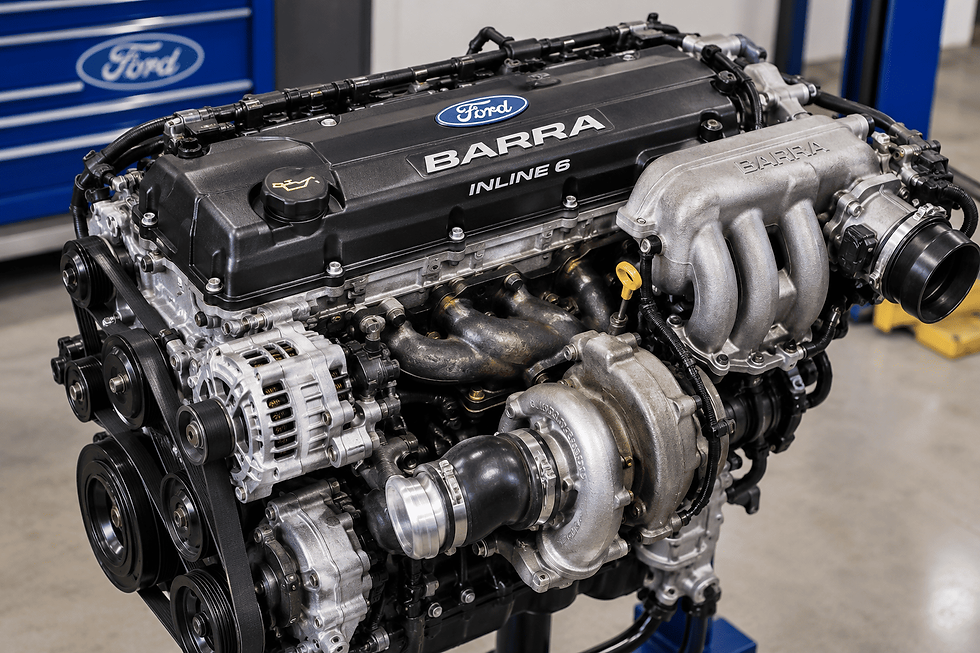
The Barra is a 4.0-litre inline-six engine that Ford Australia produced from 2002 to 2016. It powered the iconic Ford Falcon and Ford Territory models throughout its production run. The engine came in several variants, with the turbocharged versions being the most sought-after for performance applications.
Stock power output varies significantly depending on the variant. The naturally aspirated versions produced around 245 horsepower, while the factory turbocharged models pushed out between 240 and 362 kilowatts. The range-topping FPV engines came with impressive specs straight from the factory.
What sets the Barra apart is its incredibly strong bottom end. The cast-iron block and forged crankshaft can handle serious abuse. The six-bolt main caps and cross-bolted design provide exceptional rigidity. These features make it an ideal candidate for high-powered builds without requiring extensive internal modifications.
Why Are Ford Barra Engines So Popular for Performance Builds?
The Barra's popularity comes down to three key factors: strength, potential, and value. Let's explore each of these in detail.
First up is the exceptional durability of the platform. Factory internals can reliably support 500 to 600 kilowatts with proper tuning and supporting modifications. That's right—the stock bottom end can handle some serious power without needing to crack open the engine. This reliability is a massive draw for builders who want power without constant rebuilds.
The tuning potential is equally impressive. With straightforward bolt-on modifications, you can extract significantly more power from these engines. The factory turbo variants respond beautifully to upgraded intercoolers, exhaust systems, and ECU tuning. For those chasing bigger numbers, the aftermarket support has grown substantially.
Cost-effectiveness rounds out the appeal. Compared to building a high-powered LS or 2JZ engine, a Barra build often works out cheaper while delivering similar or better results. Engine cores remain relatively affordable, and the parts ecosystem has matured nicely over the years.
Can You Put a Barra Engine in Any Car?
This is one of the most common questions from enthusiasts considering a Barra swap. The short answer is yes, but with some important caveats.
Common swap candidates include:
Classic Ford Mustangs and Falcons
Mazda MX-5 and RX-7 chassis
Nissan S-chassis cars
Various hot rod and custom builds
The inline-six configuration actually makes installation simpler than you might expect. The narrow profile fits into engine bays that might struggle with a wide V8. However, the length can present challenges in some applications.
Transmission compatibility requires careful consideration. The Barra uses a specific bellhousing pattern, so adapter plates or custom solutions are often necessary. Popular options include the T56 and TR6060 manual gearboxes, along with various automatic options. Driveshaft modifications and diff upgrades typically form part of any swap project.
How Much Horsepower Can a Ford Barra Handle?
The power handling capability of the Barra is genuinely remarkable. Stock internals have proven reliable at power levels that would destroy lesser engines.
On factory pistons, rods, and crankshaft, well-tuned Barras regularly make 500 to 600 kilowatts without drama. That's roughly 670 to 800 horsepower from components that left the factory in a family sedan. This incredible headroom means most enthusiasts never need to open the bottom end.
For those pushing beyond these limits, upgraded internals become necessary. Forged pistons, stronger connecting rods, and improved head studs allow builds to exceed 1,000 kilowatts. Record-breaking Barras have surpassed 2,000 horsepower in drag racing applications, demonstrating the platform's ultimate potential.
Power targets and typical modifications needed:
300-400kw: Intake, exhaust, intercooler, tune
400-600kw: Upgraded turbo, fuel system, tune
600kw+: Forged internals, larger turbo, extensive fuel system
Essential Barra Engine Modifications for Performance
Building a high-powered Barra requires attention to several key areas. Let's break down the most important modifications.
Turbocharger upgrades typically deliver the biggest gains. Factory turbos can be upgraded to larger units like the Garrett GTX series or BorgWarner options. Single turbo setups remain popular, though twin-turbo configurations exist for those chasing maximum power. Proper manifold and wastegate selection ensures the turbo performs optimally.
The fuel system needs serious attention as power increases. High-flow injectors, upgraded fuel pumps, and larger fuel rails become essential. E85 compatibility opens up additional power potential thanks to its cooling properties and higher octane rating. Many serious builds run flex-fuel setups for versatility.
ECU tuning ties everything together. The factory Barra ECU can be modified using platforms like HP Tuners or Haltech aftermarket units. Professional tuning is absolutely critical—a poor tune can destroy an engine regardless of how strong the hardware is. Finding a tuner experienced with Barras makes a significant difference to results and reliability.
Is the Ford Barra Better Than an LS Engine?
This debate generates passionate discussion in performance circles. Both platforms have devoted followings, and each offers distinct advantages.
The Barra excels in several areas. The factory turbocharged variants provide forced induction from the outset, delivering serious power with minimal modification. The inline-six configuration offers smooth power delivery and fits narrower engine bays. Dollar for dollar, achieving high power levels often costs less with a Barra.
The LS platform brings its own strengths. Parts availability is exceptional, particularly in North America. The engine is lighter and more compact overall. The massive aftermarket means solutions exist for virtually any application or problem.
Which engine suits your build? Consider these factors:
Budget constraints and parts availability
Target power levels and intended use
Chassis compatibility and packaging
Personal preference and experience
Ultimately, both engines can achieve incredible performance. Your choice should align with your specific goals, location, and support network.

Common Barra Engine Problems and How to Avoid Them
While remarkably durable, Barras do have known weak points that high-performance applications can expose.
Timing chain guides represent the most common issue on higher-mileage engines. Plastic guides deteriorate over time and can cause catastrophic failure if ignored. Replacement with upgraded components should be considered preventative maintenance on any used engine.
Oil pump gears can fail on engines pushing serious power, particularly at high RPM. Upgraded billet gears provide peace of mind for high-performance builds. Regular oil changes with quality lubricants also help extend component life.
Preventative maintenance tips:
Replace timing components on any unknown-history engine
Use quality oil and change it frequently
Monitor oil pressure, especially at high RPM
Address any unusual noises promptly
Sourcing quality replacement parts requires some effort outside Australia. Building relationships with Australian suppliers or established importers helps ensure you're getting genuine components rather than inferior alternatives.
Conclusion: Is the Barra Right for Your Next Performance Build?
The Ford Barra engine genuinely deserves the attention it receives from the performance community. Its combination of factory strength, incredible tuning potential, and relative affordability makes it a compelling choice for serious builds. Whether you're planning a weekend warrior or a dedicated track machine, this Australian powerhouse delivers.
That said, a Barra build isn't without challenges. Sourcing engines and parts requires effort and planning. Finding experienced builders and tuners with Barra knowledge remains important for success. The logistics of importing and setting up these engines demands patience and research.
If you're willing to put in the work, a Barra-powered project can be immensely rewarding. The community continues to grow, resources become more accessible, and proven combinations make building easier than ever. So, is the Barra right for you? Only you can answer that—but the potential on offer makes it well worth considering for your next performance adventure.



Comments